Author: Siddarth Goel

  • All About Gallstones

    All About Gallstones

    Gallstones have become a ubiquitous problem with estimates suggesting up to 20-25% of various populations having the condition. Though initially relatively asymptomatic, when allowed to worsen and maybe get infected, it can become an excruciatingly painful and serious problem. Most patients are offered a relatively simple solution – cholecystectomy: surgical gallbladder removal!

    As we will understand in this blog, this approach is like shooting the victim of a crime while the criminal goes scot-free!

    The primary reasons leading to gallstone formation are hepatic-biliary congestion, excessive and the wrong type of cholesterol in the liver, poor gallbladder emptying, estrogen overload, etc. Let us understand these in detail.

    • HEPATIC BILIARY CONGESTION – The most common underlying reason is what is referred to as hepatic-biliary congestion. This can be triggered by many factors, the simplest being chronic dehydration. Due to insufficient hydration, the bile becomes thick and sticky. As a result, the fats and other salts in the bile tend to precipitate out and form stones.
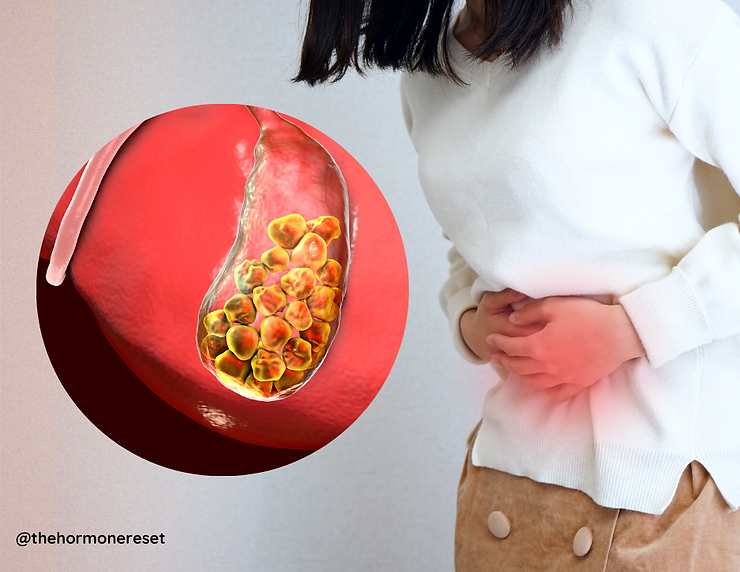
    • CHOLESTEROL – Due to an imbalance in diet, the amount of cholesterol in bile increases, making it thick and sluggish. As bile becomes thick cholesterol gets supersaturated and precipitates out in the form of soft stones of different sizes (Over 80% of gallstones are made of cholesterol). Some of these can get lodged in the gallbladder. Over a period of time as more cholesterol precipitates, these stones grow bigger and can get infected leading to the telltale symptoms of gallbladder disease – severe pain and inflammation.
    • LOW-FIBRE DIET – The low fibre content in diet also contributes to this process. Dietary fibre plays an important role in the excretion of excess cholesterol from the system. Typical modern diets are very low in fibre leading to higher cholesterol levels which contribute to gallstone formation.
    • INCREASED NUCLEATION – Increased nucleation of cholesterol particles also plays a role in the gallstone formation process. These diets low in fibre and fats and high in refined carbs may also have a role in this process. The cholesterol particles thus created are sticky and dense, much more likely to stick together to form stones.
    • ESTROGENS – Higher levels of estrogen in the body also contribute to the process of gallstone formation. Estrogen induces an increased input to the free cholesterol pool in the liver by up-regulating the low-density lipoprotein (LDL) receptor. This increased cholesterol in the liver then tends to precipitate out in the form of stones. This is one reason why women are much more likely than men to suffer from gallstones.
    • GALLBLADDER HYPOMOTILITY – Poor emptying of the gallbladder is another important reason contributing to gallstone formation. When the gall bladder does not empty completely, bile tends to stagnate in the bladder increasing the chances of formation of sludge and stones. The most common reason for this is a diet that is low in fats and high in refined carbohydrates (LCHF). Unfortunately, this is a very typical diet recommended by health authorities in various countries!

    Gall bladder empties itself in response to fat in the diet. When we consume a diet low in fats, the bladder does not empty fully leading to bile stagnation. Stagnating bile is an obvious trigger for stone formation!

    For most people, there is usually a combination of the above factors that lead to the formation of gallstones.

    HOW TO PREVENT GALLSTONES?

    1e197b 5b32dba52b434068ba9256043ec4c5f9mv2

    The good news is that almost all the reasons leading to gallstone formation are modifiable i.e. we can choose a lifestyle that prevents gallstone formation. Let us look at the various changes we can make to reduce the possibility of getting gallstones as well as getting rid of them if we already have them.

    • HYDRATION – Proper hydration is a fundamental requirement that ensures the bile is thin and free-flowing.
    • DIETARY CHANGES – Dietary changes are perhaps the most important factor that we can easily influence in our favour.
      • A diet based on unrefined wholegrains and lots of vegetables and fruits helps reduce the likelihood of bile fats precipitating out as stones.
      • Consuming a good amount of healthy fats in the diet ensures that the bile is used up for digesting the fats. This ensures that the bile does not stagnate in the bladder thereby reducing the chances of stone formation.
      • The increased fibre content in the diet helps in reducing the cholesterol load in the body hence reducing stone formation chances
    • GALLBLADDER MOTILITY – Ensuring good gallbladder motility is another important step toward reducing the likelihood of gallstone formation. Better motility helps the bladder empty itself completely so that bile does not sediment and solidify. Bitter herbs are useful in improving gallbladder motility.
    • ESTROGEN – Estrogen dominance is one key reason for excess cholesterol leading to fat precipitation in the form of stones. Hence ensuring estrogen levels are balanced is key to preventing gallstone formation. One of the reasons for excess estrogen is xenoestrogen – i.e. estrogen-like substances coming into the body from outside. Reducing estrogen overload and minimising the influx of xenoestrogens is important to reduce the chances of gallstone formation. Ensuring optimal liver function and bowel movements is important in reducing estrogen dominance.
    • CHOLESTEROL – High levels of cholesterol – especially the dense and sticky particles of cholesterol tend to stick to each other and speed up the process of stone formation. Implementing the required dietary and lifestyle changes to improve the lipid profile is key to reducing stone formation likelihood.

    A NOTE ON CHOLECYSTECTOMY – As I mentioned earlier, removing the gallbladder is like shooting the victim of a crime while the criminal is allowed to go scot-free. This approach completely ignores the root causes of the problem while focusing only on the symptoms. As the reasons remain unaddressed, the formation of stones continues even after the removal of the gallbladder leading to many issues in the future.

    On the other hand, the removal of the gallbladder leads to very poor digestion of fats creating long-term metabolic deficiencies in the body. One common outcome is deficiencies of fat-soluble vitamins like Vitamin A, D, E and K. In turn these deficiencies lead to the development of various chronic ailments in the long term.

    DISSOLVING EXISTING STONES

    The various points mentioned above can help one reduce the chances of getting gallstones as well as reduce the likelihood of recurrence for those who have had stones in the past.

    However, when it comes to existing stones, conventionally it is considered impossible to reduce or dissolve them. There is a large volume of scientific research and clinical studies have highlighted various protocols that can help dissolve or flush out existing stones.

    In the Hormone Reset Program, improving hepato-biliary health is one of our key focus areas.

    Get in touch with us if you need help with liver and gallbladder-related issues.
    1e197b c8eaef0bf6c64dd5980da2dcd30b86fbmv2

    References

    1. VAN ERPECUM, K. J., & VAN BERGE-HENEGOUWEN, G. P. (1999, March 1). Gallstones: an intestinal disease? Gut, 44(3), 435–438. https://doi.org/10.1136/gut.44.3.435
    2. Di Ciaula, A., Molina-Molina, E., Bonfrate, L., Wang, D. Q., Dumitrascu, D. L., & Portincasa, P. (2019). Gastrointestinal defects in gallstone and cholecystectomized patients. European journal of clinical investigation, 49(3), e13066. https://doi.org/10.1111/eci.13066
    3. Igimi, H., Tamura, R., Toraishi, K., Yamamoto, F., Kataoka, A., Ikejiri, Y., Hisatsugu, T., & Shimura, H. (1991). Medical dissolution of gallstones. Clinical experience of d-limonene as a simple, safe, and effective solvent. Digestive diseases and sciences, 36(2), 200–208. https://doi.org/10.1007/BF01300757
    4. Di Ciaula, A., Molina-Molina, E., Bonfrate, L., Wang, D. Q., Dumitrascu, D. L., & Portincasa, P. (2019). Gastrointestinal defects in gallstone and cholecystectomized patients. European journal of clinical investigation, 49(3), e13066. https://doi.org/10.1111/eci.13066

    Share
  • Treating Hypothyroidism With Functional Medicine Approach

    Treating Hypothyroidism With Functional Medicine Approach

    In the first part of the hypothyroidism blog we understood the problem in detail. Now let us see how we can resolve it.

    First, let us understand the various components of the problem. Once we understand these, addressing them becomes easy.

    1. Low T4 can result from the following imbalances:
      1. Iodine deficiency: Without sufficient iodine, T4 synthesis cannot happen optimally.
      2. Insufficient selenium: Low selenium in the body impacts both, T4 synthesis as well as T4 to T3 conversion.
      3. Low Protein: This could happen due to insufficient protein intake as well as poor digestion due to low digestive juices and other issues.
      4. Autoimmune activity: AI can damage thyroid tissues as well as the enzymes needed for T4 synthesis.
      5. Toxicity: Chemicals like chlorine, fluorine and bromine can replace the iodine in the hormone, rendering it useless.

    2. Poor T4 to T3 Conversion can result from the following issues:

    1. Nutrient deficiency can affect the conversion of T4 to T3 (mainly selenium, iron, zinc, and vitamin A).
    2. Conversion of T4 to T3 mainly happens in the liver and kidneys. Poor kidney and liver health; insulin resistance, fatty liver etc. adversely impact the conversion.
    3. Inflammation, (measured via ESR, HsCRP, etc.) and infections also inhibit the conversion (in this case T4 may be moderate or high)
    4. Toxicity: A variety of toxins can impair the conversion. Heavy metals (Pb, Cd, Hg) can do so by impairing the action of enzymes needed for the conversion.
    5. It is important to remember that in cases of poor conversion, it is often very useful to take a combination of T4 and T3 supplementation (instead of just T4).

    3. Low Free T4:

    1. Stress: The most common reason for the low level of fT4 is stress. High-stress hormones increase the levels of binding globulin. These globulins then bind with the T4 and hence less is available for systemic effects.
    2. Estrogen dominance (both endogenous or exogenous) also leads to low fT4 levels

    4. High Reverse T3:

    1. Stress (high cortisol and/or adrenaline) including injury and trauma can lead to a higher conversion of T4 into rT3.
    2. People having type 2 diabetes are also more prone to higher levels of rT3.
    3. Calorie restriction: Severe dieting or starvation can lead to higher rT3 levels.
    4. Specific drugs can increase RT3 while lowering T3 (certain beta-blockers and corticosteroids)
    5. Other factors like high alcohol intake, food allergy/sensitivity, and chronic infection (viral, bacterial, fungal, or parasitic) can also lead to higher rT3 levels.

    5. Autoimmune Thyroiditis: This is when the immune system produces antibodies that damage the thyroid gland resulting in autoimmune hypothyroidism (also known as Hashimoto’s Hypothyroiditis).

    This dynamic can happen due to a wide variety of causative and aggravating factors like:

    1. Intestinal permeability, which is caused by low Vitamin D, gluten and dairy sensitivity, SIBO/dysbiosis and certain medications (steroids, NSAIDs and OCPs), etc. Intestinal permeability can also be triggered by allergies/sensitivity and stress. Also by persistent, simmering infections with impaired immune function (viral, bacterial, fungal, parasitic)
    2. Stress by itself is fully capable of causing autoimmune disorders.
    3. Other factors like insufficient nutrition, especially to fuel the immune system (Vit A and D, Zinc, etc.), poor digestion, and no gall bladder can also contribute to the development of this dynamic.

    Here is a simple 4 step process that can help one reverse hypothyroidism.

    1e197b 8aa89bf651614e8aadc0f895a56052ecmv2

    STEP 1 – It is paramount to focus on reducing stress big time. Without this in place, the other interventions will also not have a full impact.

    Address the basics – good sleep, deep relaxation, yoga and meditation, gratitude journaling, etc.

    If needed, consider taking help from a professional to work on reducing stress.

    STEP 2 – Next step is to ensure optimal availability of nutrients – both for the production of T4 and converting it into T3.

    For the production of T4, we need selenium, iodine, and protein. For conversion into T3 selenium, zinc, Vitamin A and iron, etc. are required. Ensuring optimal levels of these can go a long way in helping improve thyroid function.

    STEP 3 – Next step is to check and address toxicity due to a variety of common toxins. Some of these are lead, mercury, cadmium, chlorine, fluorine, bromine, etc.

    The most common source of mercury toxicity is dental fillings and contaminated fish. Dental fillings are referred to as silver fillings, although mercury is almost half of the total. These fillings tend to be a common and potent source of mercury toxicity. It becomes much worse if they are old and worn out. If one decides to remove these fillings, it is important that the removal is handled by an experienced functional dentist so that no mercury enters the body during the removal process.

    Chlorine often comes via chlorinated tap water and swimming pools that use bleaching powder as a disinfectant. Fluoridated toothpastes are the most common source of fluorine. Bromine can sometimes come via bromated flours. An appropriate approach for detoxification should be chosen based on which toxins need to be removed.

    STEP 4 If autoimmunity is present the first step is to do a complete elimination of gluten, dairy and all grains for a period of 2-3 months. The reason for this is that these are the most common allergens leading to autoimmunity. We need to remove all grains as very often. Ensure immune nutrients like VIt A, D and zinc are all in the upper half of the reference range.

    Remember that autoimmune problems almost always start in the gut. So focus on healing the gut before moving on to the next steps.

    One can consider working with an experienced professional to implement the elimination diet protocol effectively.

    Hope this article helped you understand the problem in more detail and gave you the confidence that you can overcome hypothyroidism.

    Need help?

    References:

    1. Only the combined treatment with thyroxine and triiodothyronine ensures euthyroidism. H F Escobar-Morreale , F E del Rey, M J Obregón, G M de Escobar – https://pubmed.ncbi.nlm.nih.gov/8641203/
    2. Effect of treatment of overt hypothyroidism on insulin resistance. Aml Mohamed Nada – https://www.ncbi.nlm.nih.gov/pmc/articles/PMC3746089/
    3. Endocrine function in mercury exposed chloralkali workers. L Barregård, G Lindstedt, A Schütz, and G Sällsten – https://www.ncbi.nlm.nih.gov/pmc/articles/PMC1128033/

    Share

  • Understanding The Root Causes Of Hypothyroidism

    Understanding The Root Causes Of Hypothyroidism

    Thyroid is a butterfly-shaped endocrine gland located in the throat. Thyroid related imbalances are perhaps the most common hormonal imbalances in our society. Conservative estimates put people suffering from thyroid issues at well over 200 million!!! And a vast majority of these are women. Over half of these are undiagnosed and many more may not be treated properly.

    The thyroid hormones (T4 and T3) affect the functioning of every cell, tissue and organ in the body. Their level determines the rate at which the body produces and uses energy. In other words, the metabolic rate is largely decided by the thyroid levels. T4 is largely inactive and must be converted into T3 to be effectively used by the body. This conversion happens in other organs, primarily in the liver, kidneys and muscles.

    Some of the key symptoms of hypothyroidism are:

    1e197b 816d99d8e80c425e9b0e41bffa875807mv2
    • Slower metabolism leading to weight gain (also insulin resistance)
    • Feeling cold (when others are not)
    • Cholesterol imbalances
    • Poor digestion including constipation
    • Poor Brain function leading to poor memory, brain fog, etc
    • Heart health and function
    • Slower muscular response and low stamina
    • Dry skin and hair fall
    • Irregular periods
    • Suboptimal immune function
    • PMS, Low sex drive, Infertility
    • Mood swing
    1e197b 1e63a600aef4416d9e8c30092d439abfmv2

    Feedback Loop

    Secretion of the thyroid hormones is controlled by a feedback loop. When the brain (hypothalamus) senses low levels it secretes thyroid-releasing hormone (TRH), which in turn, stimulates the pituitary gland to secrete thyroid-stimulating hormone (TSH). This then signals the thyroid to produce more T4 and T3 (about 80% is T4). As T4 and T3 levels increase, the secretion of TRH reduces leading
    to lower TSH. This leads to the thyroid gland also reducing the production of the two hormones.

    1e197b 1ffb54a4db3c493cbdd5d7c8423ae96emv2

    Conventional Approach

    Generally, hypothyroidism is approached as a very simple problem. Most of the time only TSH levels are tested. Sometimes T4 is also included. After this, a certain dose of the T4 hormone is prescribed. The dosage is re-evaluated once or twice a year based on TSH and T4 levels. The real active hormone which is T3 is almost never taken into consideration.

    We need to understand that thyroid function is way more complex than just TSH or T4 and hence this approach is woefully inadequate!

    Thyroid function can be mediated via stress, nutritional deficiencies, toxicity, and autoimmunity. All of these need to be evaluated and addressed to reverse hypothyroidism.

    Let us look at some important factors impacting thyroid function:

    • Deficiencies can impair the body’s ability to produce T4 as well as convert T4 to T3. Iodine, selenium, and protein are needed for T4 production.
    • T4 to T3 conversion also needs Iron, Selenium, Vitamin A, and Zinc.
    • Toxins like chlorine, fluorine, bromine, lead, mercury, etc can affect both thyroid production and conversion.
    • Stress reduces the conversion of T4 to T3. T4 is the inactive form while T3 is the active one.
    • In auto-immunity, the body’s immune system itself can damage the thyroid gland thereby impacting the body’s ability to produce T4.
    • Between 80-90% of the hormone produced by the Thyroid gland is T4. It is an inactive form. To be useful it needs to be converted into T3. This conversion happens in many different parts of the body and can be affected by a variety of factors. The liver and kidney convert t4 to t3 (or rt3) for circulation. The deficiency of zinc, iron, selenium, and vitamin A can affect the conversion. Brain, heart, and skeletal muscles do the intracellular conversion (and this does not get captured in lab tests).
    • Also, T3 needs to enter the cells to be effective. This is also impacted by a variety of factors including stress.
    • Another form of T3 is known as Reverse T3. rT3 blocks the action of T3. Stress can increase the conversion of t4 to rt3 – thereby effectively reducing T3 availability. This is a double whammy – not only do T3 levels reduce, but rT3 also occupies the T3 receptors thereby further reducing the effect of T3.
    • Inflammation can reduce T3 intracellularly while serum T3 remains the same. In fact, TSH can even reduce hence we never get to understand why we feel all the symptoms of hypothyroidism.

    Tests we should actually do to decode the root causes of Hypothyroidism

    1e197b d156ecad68944b0d9bda0f6258ef7938mv2

    If we really want to understand what is happening with our thyroid we need to test for TSH, Total T4, Total T3, Free T3, Reverse T3 and the two main antibodies which are Anti-TPO and Anti-TG. In addition to these thyroid tests, it is also a good idea to test for nutritional deficiencies like vitamins, iron, iodine, selenium, zinc, and toxins like lead mercury, flourine, etc. Only if we run all these tests we can spot where the dysfunction lies.

    In this blog on hypothyroidism, we focussed on the main factors that cause and aggravate hypothyroidism In the next blog on hypothyroidism, we will tell you about the strategies to reverse hypothyroidism.

    Need help?

    • Reach out to us on whatsapp at +91-9620317773
    • Join our WhatsApp group to know more about Functional Medicine approach for balancing hormones and stay updated about our upcoming webinars and programs. https://chat.whatsapp.com/KeFOA2DsA296Ht84xYxLfh
    • Know more about our Unique program for Hormone Reset : https://hormonereset.in/12-weeks-hormone-reset

    References:

    1. Only the combined treatment with thyroxine and triiodothyronine ensures euthyroidism. H F Escobar-Morreale , F E del Rey, M J Obregón, G M de Escobar –https://pubmed.ncbi.nlm.nih.gov/8641203/
    2. Effect of treatment of overt hypothyroidism on insulin resistance. Aml Mohamed Nada – https://www.ncbi.nlm.nih.gov/pmc/articles/PMC3746089/
    3. Endocrine function in mercury exposed chloralkali workers. L Barregård, G Lindstedt, A Schütz, and G Sällsten – https://www.ncbi.nlm.nih.gov/pmc/articles/PMC1128033/

    Share

  • Kidney Stones-How Can You Prevent Them & Get Rid of Them?

    Kidney Stones-How Can You Prevent Them & Get Rid of Them?

    Kidney stones are a common and one of the most painful problems. It often leads to pretty expensive treatment options. What makes it much worse is that for a majority of people the stones recur every few years. This is simply because they fail to understand and address the underlying root causes.

    Prevalent treatments for kidney stones include shockwave therapy, laparoscopic surgery and ureteroscopy. Certain medicines are used to relax the muscles of the ureter, helping the stone pass out more easily.

    So let us understand why kidney stones happen? What causes them? And what can we do to avoid as well as get rid of them?

    DEHYDRATION – Before we start delving into this topic, let us remember that the single most important reason for kidney stones is dehydration. Due to low water consumption, the volume of urine decreases, making it more concentrated. This obviously increases the chances of stones getting precipitated. For those with a tendency to get kidney stones, drinking 2-3 litres of water per day is a must. This figure needs to be adapted for lifestyle factors like ambient temperature, job profile etc. For example, a person who is into sales and has to spend a lot of time daily commuting between meetings requires a much higher water intake compared to someone else whose job involves working on a computer in an airconditioned environment.

    About 80% of kidney stones are of the calcium oxalate variety. So we need to pay attention to factors affecting the metabolism of these two constituents. Here are some of the important factors that impact calcium and oxalate levels.

    MAGNESIUM – Sufficient magnesium is critical for ensuring proper utilization of calcium. Magnesium is also one of the most common deficiencies found in our population today.

    It is helpful to take a magnesium supplement while consciously increasing the consumption of foods that are rich in magnesium (e.g. pumpkin seeds, cashews, green leafy vegetables, organic peanuts, etc.).

    If taking supplements, target to keep the levels in the upper third of the reference range. It is best to use chelated forms as they are better absorbed. If constipation is also present, consider using the citrate form (it can also be in combination with another well-absorbed form such as magnesium glycinate).

    POTASSIUM – Potassium supplementation is quite useful for patients with uric acid based stones. (Potassium should be avoided by people on certain medications like certain diuretics prescribed for hypertension). Potassium citrate is one of the more useful forms of potassium as the citrate is also useful in this condition. 200 mg can be taken daily.

    VITAMIN K2 – K2 is critical to ensure that calcium from food/supplements is taken up into bones instead of ending up in circulation and being excreted from the kidneys. If calcium remains in blood circulation there are higher chances of it reacting and forming stones. Vitamin K2 prevents this from happening. For prevention, up to 90 mcg of vitamin K2 of the MK-7 variety can be taken daily. Dosage can be increased in the case of active stones. (people on blood thinners should avoid taking K2).

    B VITAMINS, B6 – Adequate levels of all B vitamins is very important. Of special note is B6 as it is key for glutathione synthesis, oxalate metabolism and nerve health. These vitamins should be the ‘active’ type as not everyone’s body is good at converting them to active forms. E.g. for B6 the correct form is P5P and not pyridoxine. It is important to note that we need all the B vitamins to be in the upper third of the reference range. It is not good enough to have them just above the bottom of the reference range. (This is generally applicable for most nutrients).

    VITAMIN D – People with a tendency to get kidney stones should be careful while taking vitamin D supplements as it increases the absorption of calcium into the body. It also uses up the magnesium present in the body so less is available to ensure proper utilization of calcium.

    AVOID BLACK TEA – It is very important to avoid all black teas as they are a rich source of oxalates. As we saw earlier, nearly 80% of the stones are of the oxalate variety. Hence drinking black tea can aggravate the problem significantly.

    AVOID OXALATE RICH FOODS – Foods like spinach, beets, almonds, groundnuts, chocolates, etc. have a good amount of oxalates and should be avoided or consumed in moderation by people susceptible to kidney stones.

    AVOID PURINE RICH FOODS – Another common food ingredient that can cause kidney stones is purine. This is generally connected with the uric acid variety of stones. Some foods high in purines are red and a few other types of meat, some seafood varieties, all alcoholic beverages, mushrooms, green peas, cauliflower, etc.

    Fresh LEMON JUICE is one of the simplest tools to both prevent the recurrence of stones as also to get rid of active stones. The juice of half a lemon can be taken twice a day to prevent a recurrence. While for existing stones one can consume the juice of 4 lemons per day. The high citric acid content binds with extra calcium and prevents it from precipitating in the form of stones.

    INSULIN RESISTANCE & INFLAMMATION – Insulin resistance and chronic inflammation often play a key role in this dynamic and must be addressed for any long-lasting solution. Very often insulin resistance and prediabetes are present to an appreciable extent in kidney stone patients. The most important and easiest steps are to eliminate all sugars and refined carbohydrates.

    It is well known that diabetics are at a higher risk for kidney stones because elevated blood sugar is highly oxidising in nature and damages the kidneys.

    LIVER & BILE – Overall liver health and quality of bile also have an impact on kidney stones. Sluggish bile flow is also a common contributor to stone formation. Also individuals whose gallbladders have been removed are at a higher risk. These dynamics ensure that enough bile is not available for fat digestion. This unabsorbed fat readily binds with calcium in the gut. Hence calcium is not available for binding with oxalates, which then readily get absorbed by the gut.

    YEAST – Certain yeast species (such as candida aspergillus) produce oxalates as part of their metabolic processes. So people with yeast overgrowths can struggle with excessive oxalate levels (also causing issues with the urinary/vaginal tract and elsewhere in the body).

    OXALOBACTER – Oxalobacter formigenes is a commensal bacteria (found in a healthy gut). It metabolises oxalates thereby reducing the amount in the body. If this is low in numbers or activity then oxalates can build up in the system.

    I hope this article gives some useful insight into the various causes and solutions for kidney stones.

    Please leave your thoughts in the comments section below.

    REFERENCES

    Trinchieri, A., Esposito, N., & Castelnuovo, C. (2009). Dissolution of radiolucent renal stones by oral alkalinization with potassium citrate/potassium bicarbonate. Archivio italiano di urologia, andrologia : organo ufficiale [di] Societa italiana di ecografia urologica e nefrologica, 81(3), 188–191.
    Reddy, S. K., Shaik, A. B., & Bokkisam, S. (2014). Effect of Potassium Magnesium Citrate and Vitamin B-6 Prophylaxis for Recurrent and Multiple Calcium Oxalate and Phosphate Urolithiasis. Korean Journal of Urology, 55(6), 411. https://doi.org/10.4111/kju.2014.55.6.411
    di Tommaso, L., Tolomelli, B., Mezzini, R., Marchetti, M., Cenacchi, G., Foschini, M., & Mancini, A. (2002b). Renal calcium phosphate and oxalate deposition in prolonged vitamin B6 deficiency: studies on a rat model of urolithiasis. BJU International, 89(6), 571–575. https://doi.org/10.1046/j.1464-410x.2002.02670.x
    Marickar Y. M. (2009). Calcium oxalate stone and gout. Urological research, 37(6), 345–347. https://doi.org/10.1007/s00240-009-0218-0
    Einollahi, B., Naghii, M. R., & Sepandi, M. (2013). Association of nonalcoholic fatty liver disease (NAFLD) with urolithiasis. Endocrine regulations, 47(1), 27–32. https://doi.org/10.4149/endo_2013_01_27

    Share