Dans l'univers des jeux d'argent en ligne, les casinos offrent une multitude d'opportunités pour maximiser vos gains. Les bonus sont une manière efficace d'augmenter votre capital de jeu sans avoir à investir davantage de votre propre argent. Par exemple, un bonus de bienvenue peut vous permettre de commencer à jouer avec un montant plus élevé. Il est crucial de bien s'informer sur les différentes offres disponibles. Pour explorer une plateforme qui propose des bonus attractifs, visitez MadCasino. Ce site se distingue par une interface conviviale et des promotions régulières, attirant ainsi de nombreux joueurs. En choisissant judicieusement, vous pourrez augmenter vos chances de gains tout en profitant d'une expérience de jeu enrichissante.

Les machines à sous représentent une part importante de l'expérience dans les casinos en ligne. Ces jeux sont non seulement divertissants, mais ils offrent également la possibilité de remporter des jackpots impressionnants. En jouant à des titres populaires, vous pourrez découvrir des mécaniques de jeu innovantes et des graphismes époustouflants. En effet, des plateformes comme Betzino Casino proposent une vaste sélection de machines à sous, allant des classiques aux plus modernes. La diversité des jeux permet aux joueurs de trouver leurs préférés, tout en leur offrant la chance de gagner de gros prix. N'oubliez pas de lire les règles de chaque jeu pour maximiser vos chances de succès.

Le jeu en direct, ou live casino, est une tendance qui a pris de l'ampleur ces dernières années. Cette expérience immersive permet aux joueurs d'interagir en temps réel avec des croupiers professionnels. Les jeux tels que le blackjack, la roulette et le baccarat sont disponibles en mode live, offrant une atmosphère de casino terrestre depuis le confort de votre domicile. Pour une expérience de jeu inégalée, consultez Bruno Casino. Ce site se spécialise dans les jeux en direct, offrant des tables avec des limites variées pour convenir à tous les types de joueurs. L'interaction sociale et l'excitation du jeu en direct en font une option incontournable pour les amateurs de sensations fortes.

Les paris sportifs sont une autre dimension passionnante des jeux d'argent en ligne. Les plateformes de paris permettent aux utilisateurs de parier sur une multitude d'événements sportifs, augmentant ainsi l'engagement et le divertissement. Avec des cotes compétitives et des promotions intéressantes, il est possible de maximiser vos gains à chaque pari. Pour découvrir un site qui propose des options de paris variées, visitez Instant Casino. Ce casino en ligne offre une interface facile à naviguer, et des mises à jour en temps réel des cotes, ce qui en fait un choix judicieux pour les passionnés de sport. En intégrant les paris sportifs à votre expérience de jeu, vous trouverez une nouvelle dimension d'excitation et de potentiel de gain.

Tag: hormone reset

  • Psoriasis: Uncovering the Roots and Finding Lasting Relief with Functional Medicine

    Psoriasis: Uncovering the Roots and Finding Lasting Relief with Functional Medicine

    Functional Medicine Psoriasis is a chronic autoimmune condition characterised by red, scaly patches on the skin that can appear anywhere on the body. While it is commonly associated with skin issues, psoriasis is an inflammatory disorder involving the immune system. Traditional treatments, such as topical creams, phototherapy, and systemic medications, can provide relief but often fail to address the root causes of the condition. Functional medicine looks beyond symptom management to uncover and address the underlying factors contributing to psoriasis. In this blog, we will explore the roots of psoriasis, its triggers, and how functional medicine can offer lasting relief through a personalised, holistic approach.

    Understanding Psoriasis: A Complex Condition

    Psoriasis is more than just a skin disease—it is a systemic condition that involves immune system dysfunction. It occurs when the immune system mistakenly attacks healthy skin cells, leading to an overproduction of skin cells that pile up on the surface, forming plaques. The most common types of psoriasis include:

    • Plaque Psoriasis: Characterized by raised, red patches covered with silvery scales.
    • Guttate Psoriasis: Small, drop-shaped lesions, often triggered by infections.
    • Inverse Psoriasis: Red, shiny lesions that appear in skin folds.
    • Pustular Psoriasis: White pustules surrounded by red skin.
    • Erythrodermic Psoriasis: Severe, widespread redness and shedding of skin

    Psoriasis can affect any part of the body, but it is most common on the elbows, knees, scalp, and lower back.

    Traditional Treatments for Psoriasis

    Traditional treatments for psoriasis include:

    • Topical medications: These drugs are applied topically to the affected area to decrease inflammation and allow the scales to clear.
    • Light therapy: This therapy involves the use of ultraviolet light to slow the growth of skin cells.
    • Oral medications: These drugs are oral drugs that aid in the suppression of the immune system.

    None of the above address the root causes of psoriasis. 

    The Root Causes of Psoriasis

    Psoriasis is influenced by multiple internal and external factors that can contribute to its development and flare-ups:

    1. Immune System Dysfunction
      At the core of psoriasis is an overactive immune response. T-cells, a type of white blood cell, mistakenly attack healthy skin cells, triggering inflammation and abnormal skin cell turnover. This dysregulated immune response is often linked to environmental triggers, such as infections or stress.
    2. Environmental Triggers
      While genetics lay the foundation, environmental factors often act as triggers for psoriasis flare-ups. Some of the most common environmental triggers include:
      • Infections: Particularly streptococcal infections, candida overgrowth, parasites, which are known to trigger psoriasis (Michaëlsson et al., 2019).
      • Stress: Emotional stress is a common trigger for psoriasis flare-ups, likely due to the role of cortisol in immune system modulation (Dhabhar, 2014).
      • Diet: A pro-inflammatory diet rich in sugar, gluten, and processed foods can exacerbate inflammation, while an anti-inflammatory diet can help manage symptoms (Barrea et al., 2019).
      • Environmental Toxins: Exposure to chemicals, pollutants, or smoking can worsen psoriasis symptoms and inflammation.
    3. Gut Health
      The gut plays a crucial role in immune system regulation. Dysbiosis (an imbalance in the gut microbiome) can contribute to systemic inflammation and immune dysfunction, potentially triggering or worsening psoriasis (Boehncke & Schön, 2015). The gut-skin axis, a connection between gut health and skin inflammation, is gaining recognition in psoriasis research.

    Functional Medicine for Psoriasis

    Functional medicine is identification of the causative factors of a disease rather than its symptoms alone. It has been very effective in the reversal of psoriasis, as it would be able to point out factors affecting the patient and then focus on these issues.Functional medicine is healing from the inside out, not just alleviating psoriasis but making a person healthier and more alive.

    How Functional Medicine Transforms Psoriasis Care

    Functional medicine takes a root-cause approach to healthcare, aiming to identify and address the underlying factors that contribute to disease. Instead of merely managing symptoms with topical creams or systemic medications, functional medicine practitioners seek to restore balance in the body by considering multiple aspects of health—nutrition, lifestyle, genetics, and environmental factors. In the case of psoriasis, functional medicine focuses on the following key areas:

    1. Diet and Nutrition
      An anti-inflammatory diet is central to managing psoriasis. Reducing the intake of pro-inflammatory foods, such as sugar, refined carbs, and gluten, can help reduce systemic inflammation and skin flare-ups. Instead, a diet rich in omega-3 fatty acids (from fish or flaxseed), antioxidants (from fruits and vegetables), and healthy fats (such as those found in avocados and olive oil) can support skin health and reduce inflammation. Some functional medicine practitioners also recommend eliminating food allergens, such as gluten or dairy, to see if it improves symptoms.
    2. Gut Health Optimization
      Given the link between gut health and psoriasis, improving the microbiome through probiotics, prebiotics, and a nutrient-dense diet is a key aspect of functional medicine. Healing the gut lining, balancing gut bacteria, and reducing intestinal permeability (leaky gut) may help reduce inflammation and autoimmunity. Studies have shown that the use of probiotics can improve psoriasis symptoms by modulating the immune response (Zhang et al., 2019).
    3. Addressing Infections and Immune Dysregulation
      Infections, particularly streptococcal throat infections, can trigger psoriasis flare-ups. A functional medicine approach involves identifying and treating any underlying infections that may be exacerbating the condition. Additionally, modulating immune system activity with nutrients such as vitamin D, omega-3 fatty acids, and antioxidants can help restore immune balance. Some research suggests that vitamin D deficiency may worsen psoriasis, and supplementation may help alleviate symptoms (Ghoreschi et al., 2011).
    4. Reducing Stress
      Stress is a powerful trigger for psoriasis flare-ups. Functional medicine emphasizes the importance of stress management techniques such as meditation, yoga, deep breathing exercises, and mindfulness. By addressing the root cause of stress, individuals can help modulate their cortisol levels and reduce inflammation in the body.
    5. Detoxification
      Detoxifying the body through practices like saunas, adequate hydration, and reducing exposure to environmental toxins (such as smoking, heavy metals, or pesticides) is another important aspect of functional medicine. Reducing the burden on the liver and improving toxin elimination can help reduce the inflammatory load on the body.

    Clinical Evidence Supporting Functional Medicine for Psoriasis Relief

    A number of studies have supported the effectiveness of functional medicine approaches for psoriasis management:

    • Dietary Interventions: A study published in the Journal of Dermatological Treatment found that dietary changes, including a gluten-free diet, led to a significant reduction in psoriasis symptoms (Barrea et al., 2019).
    • Probiotics and Gut Health: Research has shown that probiotics can improve the skin barrier and reduce inflammation in patients with psoriasis (Zhang et al., 2019).
    • Vitamin D Supplementation: Vitamin D levels have been shown to correlate with the severity of psoriasis. Supplementation with vitamin D may help regulate immune responses and improve skin health (Ghoreschi et al., 2011).

    Psoriasis is a multifactorial condition that requires a comprehensive, personalized approach for effective management. Functional medicine offers a holistic pathway to uncovering the root causes of psoriasis and finding lasting relief. By focusing on diet, gut health, immune regulation, stress management, and detoxification, functional medicine provides a promising framework for those seeking long-term solutions beyond conventional treatments. If you suffer from psoriasis, working with a functional medicine practitioner can help you take control of your health and improve your skin’s appearance, all while addressing the underlying factors contributing to the condition. Functional medicine is healing from the inside out, not just alleviating psoriasis but making a person healthier and more alive.

    Also Read: What is Psoriasis Disease? How to Cure Psoriasis With Functional Medicine?


    References

    1. Barrea, L., Balato, N., et al. (2019). Nutrition and psoriasis: Is there any association between the severity of the disease and adherence to the Mediterranean diet? Journal of Translational Medicine, 17(1), 1-8.
    2. Boehncke, W. H., & Schön, M. P. (2015). Psoriasis. The Lancet, 386(9997), 983-994.
    3. Dhabhar, F. S. (2014). Effects of stress on immune function: The good, the bad, and the beautiful. Immunologic Research, 58(2), 193-210.
    4. Ghoreschi, K., et al. (2011). Modulation of the immune response in psoriasis and psoriatic arthritis by vitamin D. Nature Reviews Rheumatology, 7(4), 255-261.
    5. Michaëlsson, G., et al. (2019). Infections in psoriasis: The role of streptococcal and other infections in triggering guttate psoriasis. European Journal of Dermatology, 29(1), 12-18.
    6. Tsoi, L. C., et al. (2017). Genetic associations with psoriasis. The Lancet, 389(10081), 1216-1230.
    7. Zhang, Z., et al. (2019). Effects of probiotics on psoriasis: A systematic review and meta-analysis. Journal of Dermatological Treatment, 30(6), 583-588.
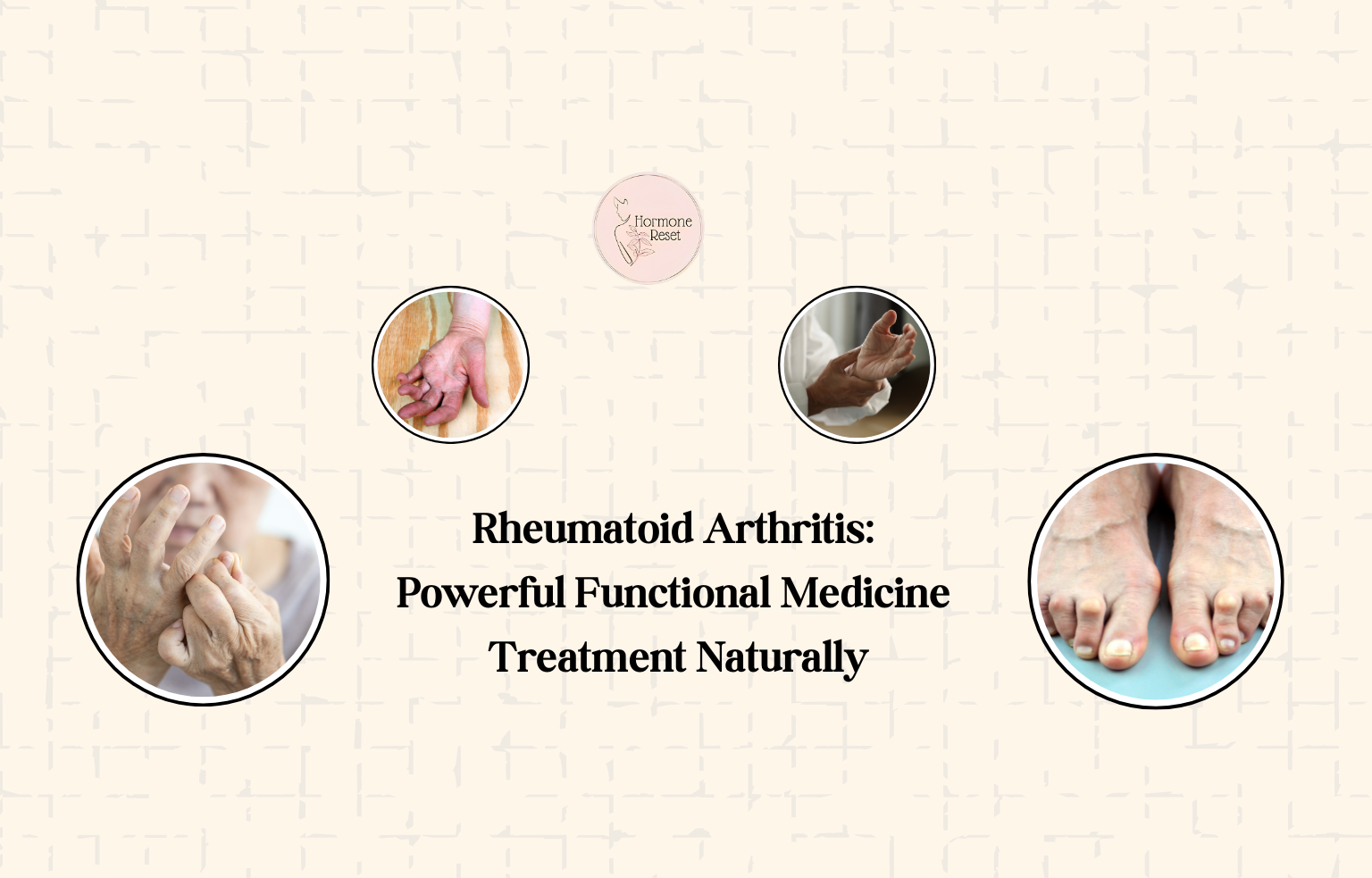
  • Rheumatoid Arthritis: Powerful Functional Medicine Treatment Naturally

    Rheumatoid Arthritis: Powerful Functional Medicine Treatment Naturally

    Rheumatoid Arthritis (RA) is more than just joint pain. It’s an autoimmune condition where the body mistakenly attacks its own tissues, leading to chronic inflammation, pain, and joint damage. But what if the root cause of RA isn’t just genetics or lifestyle? What if along with other factors, hormones play a critical role in triggering and sustaining this disease?

    Recent research and integrative approaches, like those at Hormone Reset, show that balancing hormones is a game-changer in treating RA. Functional medicine takes a deep dive into how hormonal imbalances, gut health, and lifestyle factors influence autoimmune diseases, offering a root-cause solution rather than just symptom management.

    The Science Behind Rheumatoid Arthritis and Autoimmune Dysfunction

    Rheumatoid Arthritis is classified as an autoimmune disorder, meaning the body’s immune system mistakenly attacks healthy tissues. Several key factors contribute to this dysfunction:

    • Genetic Predisposition: Some individuals are more susceptible to autoimmune conditions due to their genetic makeup.
    • Environmental Triggers: Toxins, infections, and even unsuitable diet can activate an autoimmune response.
    • Chronic Inflammation: Persistent inflammation leads to tissue damage and worsens RA symptoms.
    • Cortisol Imbalance: Chronic stress leads to excess cortisol, which disrupts the immune system and increases inflammation.
    • Estrogen Dominance: High estrogen levels can overstimulate the immune system, increasing RA risk.
    • Thyroid Dysfunction: Hypothyroidism and Hashimoto’s thyroiditis are linked to RA, as they both fuel systemic inflammation.
    • Insulin Resistance: Blood sugar imbalances can worsen inflammation and joint damage.

    By addressing these triggers, functional medicine provides a holistic approach to healing rather than just suppressing and masking symptoms.

    How Hormones Influence Rheumatoid Arthritis Development?

    Many Rheumatoid Arthritis patients, especially women, experience symptom fluctuations related to hormonal changes. Why? Because hormones regulate immune responses, inflammation, and cellular function. Here’s how hormones impact RA:

    Estrogen & Progesterone: The Immune Regulators

    • Women are three times more likely to develop Rheumatoid Arthritis than men, often experiencing symptom flare-ups during pregnancy, postpartum, or menopause.
    • Estrogen and progesterone have anti-inflammatory properties, but their imbalances can trigger immune dysfunction and increase inflammation.
    • Low estrogen levels, especially post-menopause, contribute to increased inflammation and joint degeneration.

    Cortisol: The Stress-Induced Firestarter

    • Chronic stress elevates cortisol, a stress hormone that, when dysregulated, weakens the immune system and fuels inflammatory cytokines, worsening RA symptoms.
    • Chronic stress can also lead to Adrenal dysfunction that leads to an inability to regulate inflammation effectively, making flares more severe and frequent.

    Thyroid Hormones: The Overlooked Factor

    • Thyroid dysfunction is highly correlated with RA, as both aid to low immunity.
    • Hypothyroidism (low thyroid function) slows down metabolism, weakens the immune system, and promotes joint stiffness and fatigue.

    Insulin Resistance & Blood Sugar Spikes

    • High insulin and unstable blood sugar levels drive systemic inflammation, worsening Rheumatoid Arthritis symptoms.
    • Conversely, RA patients often exhibit higher insulin resistance, making dietary and lifestyle changes crucial in treatment.

    The Functional Medicine Approach to Rheumatoid Arthritis Healing

    functional medicine

    Unlike conventional medicine, which primarily treats symptoms with medications, functional medicine digs deeper to uncover underlying triggers. Here’s how it differs:

    Conventional MedicineFunctional Medicine
    Focuses on symptom relief with painkillers and immunosuppressantsIdentifies root causes like gut health, toxins, and nutrient deficiencies
    Often leads to side effects and long-term dependence on medicationsUses natural interventions to support the body’s healing mechanisms
    Ignores the role of diet and lifestylePrioritizes nutrition, lifestyle changes, and personalized treatment

    Identifying the Root Causes of Rheumatoid Arthritis

    Unlike conventional medicine, which primarily focuses on symptom suppression, a functional medicine approach seeks to uncover the deeper triggers of Rheumatoid Arthritis. This involves:

    • Advanced Hormone Testing to detect imbalances in estrogen, progesterone, cortisol, thyroid hormones, and insulin.
    • Inflammation Marker Analysis (CRP, ESR) to assess the severity of autoimmune activity.
    • Nutrition Status Assessment helps understand if low levels of key nutrients like vitamins a, b12 and d, omega 3 fatty acids, zinc, etc. are causing or worsening the disease dynamics.
    • Gut Health Assessment to identify leaky gut syndrome and dysbiosis etc, which often triggers autoimmune conditions.
    • Environmental Toxicity Exposure Screening to evaluate toxins, heavy metals, and pollutants affecting immune function.
    • Genetic Testing to assess predispositions and guide personalised interventions.

    By understanding these factors, a targeted healing strategy can be developed.

    The Role of Gut Health in Rheumatoid Arthritis

    Gut health plays a crucial role in autoimmune conditions like Rheumatoid Arthritis. The gut microbiome regulates the immune system, and imbalances can lead to chronic inflammation and autoimmunity.

    Leaky Gut Syndrome and Rheumatoid Arthritis

    • Increased intestinal permeability—often referred to as “leaky gut”—allows harmful toxins, microbes, and undigested food particles to pass through the gut lining and enter the bloodstream. This triggers an immune response, causing the body to attack these foreign invaders and inadvertently inflame its own tissues.
    • Multiple studies have found that individuals with RA commonly experience gut dysbiosis, a state where the balance of good and bad bacteria in the gut is disrupted. This imbalance contributes to ongoing systemic inflammation and worsens autoimmune reactions. Moreover, certain gut bacteria such as Prevotella copri have been associated with increased RA risk, reinforcing the gut-joint connection in autoimmunity.
    • Low levels of beneficial microbes like Bifidobacteria and Lactobacilli have also been noted in RA patients, further aggravating immune dysfunction and gut barrier weakness.
    • Gut infections and overgrowth of pathogens such as Candida albicans may also contribute to heightened immune activation in RA.

    Healing the Gut for Rheumatoid Arthritis Relief 

    • Probiotics & Fermented Foods: Support a healthy microbiome with yogurt (dahi), kefir, sauerkraut, and kombucha. These foods help reintroduce beneficial bacteria into the digestive tract, which may improve immune regulation.
    • Bone Broth & Collagen: Contain amino acids like glycine and proline that help repair the intestinal lining, reduce systemic inflammation, and support joint health.
    • Eliminating Food Triggers: Gluten (gehun), dairy (doodh and milk-based products), and processed foods can damage the intestinal barrier, increase gut permeability (leaky gut), and initiate autoimmune flares. An elimination diet may provide clarity and relief.
    • Prebiotics & Fiber: Feed beneficial bacteria and support gut barrier function. Rich sources include garlic (lehsun), onions (pyaaz), leeks (hara pyaaz), bananas (kela), asparagus (shatavari), and chicory root.
    • Herbal Support: Supplements such as slippery elm, marshmallow root, and licorice root (mulethi) have mucilaginous properties that coat and soothe the gut lining, reduce inflammation, and promote healing of the GI tract.

    The Rheumatoid Arthritis Connection Between Toxins and Autoimmune Disorders

    How Environmental Toxins Trigger Rheumatoid Arthritis

    • Heavy metals like mercury, aluminium and lead can disrupt immune function.
    • Pesticides and chemicals in food can contribute to autoimmune flare-ups.
    • Plastics and endocrine-disrupting chemicals interfere with hormonal balance, fueling inflammation.

    Reducing Toxin Exposure for Rheumatoid Arthritis Relief

    • Choose organic foods whenever possible.
    • Filter drinking water to remove contaminants.
    • Reduce plastic use and switch to glass or stainless steel containers.
    • Opt for natural personal care and cleaning products.

    Natural Strategies for Managing Rheumatoid Arthritis

    Addressing Rheumatoid Arthritis effectively requires a multi-faceted approach that restores balance to the body. Here are some proven strategies:

    Nutritional and Dietary Adjustments

    food
    • Anti-Inflammatory Diet: Include omega-3-rich foods like fatty fish (salmon, sardines), flaxseeds (alsi), and walnuts (akhrot). Add anti-inflammatory spices such as turmeric (haldi) and ginger (adrak), and eat plenty of leafy greens like spinach (palak), fenugreek leaves (methi), and amaranth (chaulai). These Anti-Inflammatory foods help lower inflammation markers and support joint health.
    • Blood Sugar Stabilization: Avoid sugary snacks, white bread (safed double roti), and soft drinks. Focus on complex carbohydrates such as brown rice (bhura chawal), millet (bajra, jowar), sweet potatoes (shakarkand), and legumes (rajma, chana). These help prevent blood sugar spikes, reducing insulin-driven inflammation.
    • Gut Health Restoration: Strengthen digestion with fermented foods like yogurt (dahi), buttermilk (chaas), and pickled vegetables (achar). Bone broth (yakhni) and collagen support gut lining repair. Fiber-rich foods like oats (jai), fruits (seb, papita), and vegetables (gajar, lauki) feed beneficial bacteria and enhance detoxification.
    • Hydration & Detoxification: Drink at least 2–3 liters of water daily. Add herbal teas like tulsi, mint (pudina), or cumin (jeera) water to support kidney and liver detox pathways. Hydration improves lymphatic flow and reduces joint stiffness.

    Lifestyle Modifications

    • Stress Management: Use mindfulness, meditation, and deep breathing exercises to regulate cortisol and reduce chronic stress, a key factor in RA flare-ups. You can use different apps for guided practices.
    • Physical Activity: Engage in low-impact workouts like yoga (especially restorative and yin yoga), tai chi, and gentle strength training to improve joint flexibility, reduce stiffness, and enhance blood circulation.
    • Quality Sleep: Prioritize 7–9 hours of deep, restorative sleep. Use sleep hygiene strategies like maintaining a consistent bedtime, limiting screen time, and using magnesium supplements or herbal teas (like chamomile or ashwagandha) to improve sleep quality.
    • Sunlight & Vitamin D: Aim for 15–20 minutes of early morning sun exposure daily to boost natural vitamin D production, which supports immune regulation and bone mineral density. If deficient, consider supplementation under medical supervision.
    • Community & Emotional Wellbeing: Join support groups, engage in hobbies, or volunteer. Strong social bonds and emotional expression (like journaling or therapy) lower cortisol levels and enhance the body’s healing capacity, especially in chronic inflammatory conditions like RA.

    A New Era of Rheumatoid Arthritis Healing Through Functional Medicine

    Rheumatoid Arthritis is a complex condition, but functional medicine offers hope for long-term healing. By identifying hormonal imbalances, gut dysfunction, and environmental triggers, this approach provides a path to recovery beyond just medication.

    Healing is possible when we address the root cause, not just the symptoms. With the right hormone reset, dietary interventions, detoxification strategies, and lifestyle changes, you can regain control over your health and live pain-free.

    Are You Ready to Take Control of Your Rheumatoid Arthritis Naturally?

    Connect with Hormone Reset today to get a personalised plan that restores hormonal balance, reduces inflammation, and gives you back your quality of life.

    Further if you’re looking for one-on-one consultation with our Specialists, then Book Now!


    References

    Conventional Medical Perspective on Rheumatoid Arthritis: Cleveland Clinic – RA Overview