Table of Contents
Mirror Moment: The Story We All Live
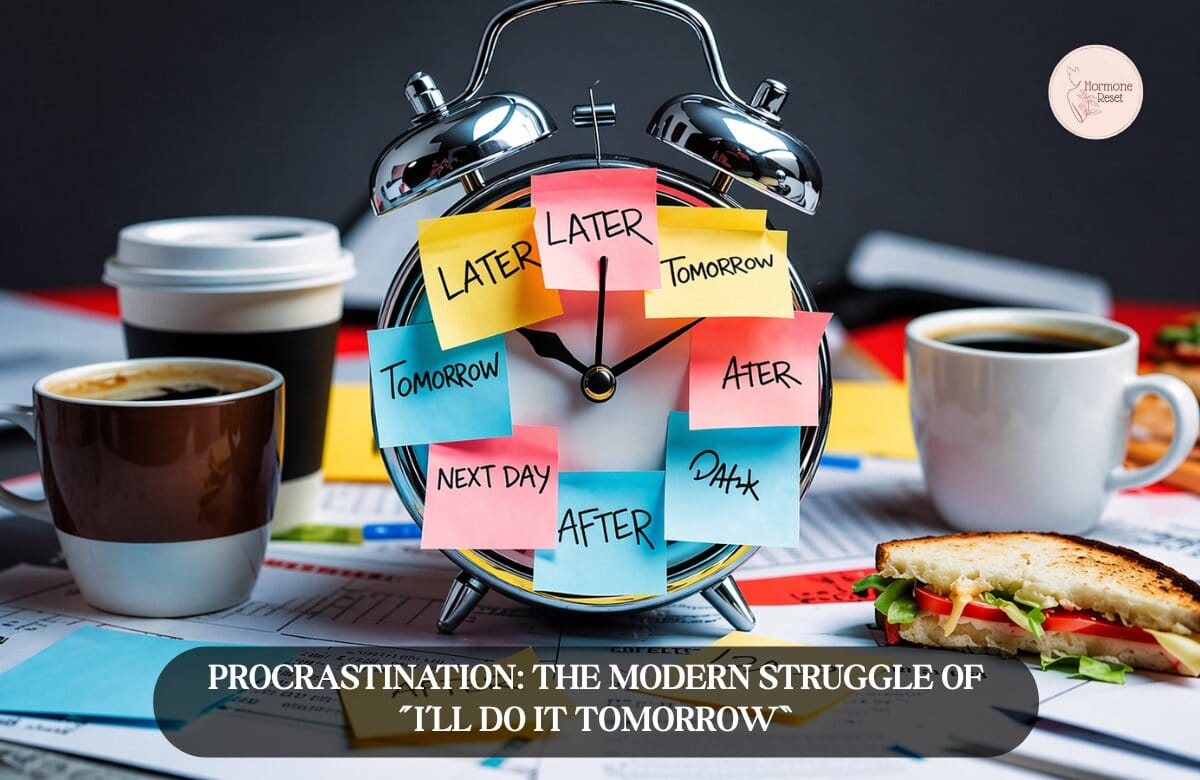
You sit down with a cup of coffee, open your laptop, and promise yourself: “Just 10 minutes of focused work.”
An hour later, you’re deep into Instagram reels, your task untouched, and your brain whispers, “I’ll do it tomorrow.”
Sounds familiar? You’re not alone. In fact, research estimates that 20–25% of adults and up to 70% of students struggle with chronic procrastination. But here’s the truth — it’s not laziness.
It’s a biological, emotional, nervous system, and energy-driven imbalance that functional medicine can help us heal, not just “manage”.
What Is Procrastination, Really?
Procrastination is the voluntary delay of important tasks despite knowing the negative outcomes.
It’s a self-regulation breakdown where short-term comfort wins over long-term goals — a tug-of-war between your emotional brain and your rational brain.
Functional medicine views procrastination as a mind-body disconnect: when inflammation, nutrient depletion, poor sleep, stress and trauma, or hormonal imbalance hijack the brain’s ability to plan and act.
“Procrastination is not a time issue; it’s an energy and alignment issue.”
The Neuroscience Behind Procrastination
At its core, procrastination is a neurochemical conflict between two brain regions:
- Limbic system – seeks pleasure, comfort, and immediate reward.
- Prefrontal cortex – plans, decides, and executes long-term actions.
When we face stress, sleep deprivation, inflammation, or low mitochondrial energy, the prefrontal cortex weakens, and the limbic system takes over.
That’s why even intelligent, disciplined people delay — the nervous and energy system, not the moral system, is failing.
Research has linked procrastination to:
- Dopamine imbalance → Reduced motivation and reward sensitivity.
- Cortisol elevation → Stress and avoidance behavior.
- Mitochondrial dysfunction → Brain fatigue and reduced cognitive control.
- Blood sugar fluctuations → Mood swings and poor focus.
Studies show that genetic variation in dopamine receptors and chronic stress directly influence procrastination behavior (Schlüter et al., 2019; Svartdal & Steel, 2022).
GABA: The Missing Calm That Helps You Begin
If dopamine drives motivation, GABA provides the calm required to act on it. GABA is the brain’s primary inhibitory neurotransmitter — it slows down overthinking, reduces anxiety, and creates a sense of internal safety. When GABA levels are low, even simple tasks can feel mentally heavy, leading to avoidance, restlessness, and the familiar “I’ll do it later” response. Functional medicine recognizes that chronic stress, poor sleep, nutrient deficiencies, and gut imbalance can all lower GABA activity, making procrastination more of a neurochemical issue than a behavioral one. Supporting GABA through breathwork, sleep, magnesium, and mindful practices helps quiet the emotional noise — allowing the brain to shift from resistance to action.
How to Support GABA Naturally
The goal is to calm the mind so action feels easier, not forced:
- Practice slow breathing → Long exhalation activates the calming response
- Improve sleep quality → Deep sleep restores GABA balance
- Include magnesium-rich foods/supplements → Supports relaxation and nerve function
- Limit stimulants → Reduce caffeine and screen exposure, especially at night
- Engage in gentle movement → Walking, yoga, or stretching enhances GABA activity
- Create calming rituals → Music, meditation, or quiet time signals safety to the brain
The Limbic System: Why Your Brain Chooses Comfort Over Action
At the heart of procrastination lies the limbic system — your emotional brain that is wired for safety, comfort, and immediate relief. Whenever a task feels overwhelming, unfamiliar, or tied to past stress, the limbic system interprets it as a threat and pushes you toward avoidance. This is why you may consciously want to work, yet find yourself scrolling or delaying — not out of laziness, but because your nervous system is trying to protect you. In states of chronic stress, poor sleep, or inflammation, this emotional brain becomes overactive, overpowering the prefrontal cortex (your logical, decision-making center). The result is a cycle where short-term comfort wins over long-term goals, until the underlying stress physiology is addressed.
How to Gently Rebalance the Limbic System
Instead of forcing discipline, the goal is to create a sense of safety in the brain:
- Start small → Break tasks into 2–5 minute actions to reduce overwhelm
- Use breathwork → Slow, deep breathing (longer exhale) calms the stress response
- Regulate your environment → Work in a calm, clutter-free space to reduce sensory overload
- Prioritize sleep → Rested brain = stronger prefrontal control
- Process emotions → Journaling,reflection and other trauma release techniques help release hidden resistance
- Reduce pressure language → Replace “I have to” with “I can start small”
Why It Happens: Age & Gender Dimensions
- Teens & Students: Underdeveloped prefrontal cortex + high dopamine craving = classic last-minute energy bursts.
- Adults: Overloaded nervous system and chronic stress lead to decision fatigue.
- Women: Hormonal fluctuations (especially estrogen and progesterone) affect dopamine and serotonin — influencing motivation cycles.
- Men: Often show higher impulsivity and reward-seeking procrastination, tied to testosterone and dopamine signaling.
Functional medicine emphasizes that biochemistry changes across life stages, and procrastination often mirrors those internal rhythms.
Symptoms — Are You Dealing With Procrastination Biologically?
Here’s a quick self-check:
You delay even simple tasks until pressure builds.
You feel guilty or anxious after avoiding work.
You experience fatigue, brain fog, or low motivation.
You need caffeine, deadlines, or panic to get started.
You “know” what to do but can’t make yourself begin.
If this resonates — your procrastination might be rooted in stress physiology, mitochondrial burnout, or neurotransmitter imbalance, not personality flaws.
Functional Medicine Insight: Heal the Body to Focus the Mind
Functional medicine looks beneath behavior — into cellular health, hormone rhythm, gut-brain communication, and energy metabolism.
1. Balance Blood Sugar
- High sugar intake and skipped meals lead to insulin spikes → dopamine crashes → attention dips.
- Focus foods: protein-rich breakfast, omega-3 fats, magnesium, and chromium.
2. Support Mitochondria
- Brain energy (ATP) drives focus. Chronic fatigue = procrastination in disguise.
- Support with CoQ10, alpha-lipoic acid, B vitamins, and gentle movement.
3. Heal the Gut
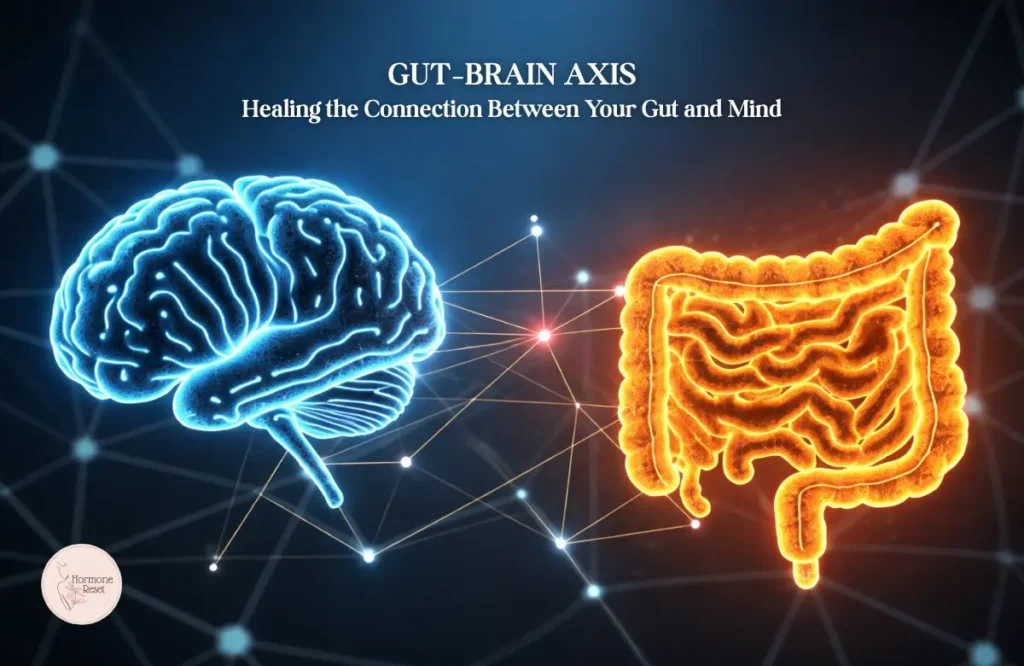
- 90% of serotonin and 50% of dopamine precursors originate in the gut. Dysbiosis can mean low drive, poor mood, and decision fog.
- Add probiotic-rich foods, fiber, and remove processed sugars.
4. Reset Circadian Rhythm
- Screen exposure after 9 PM suppresses melatonin, disturbs sleep, and reduces next-day motivation.
- Morning sunlight and digital detox before bed rebuild mental clarity.
5. Resolve Trauma,Stress & Cortisol
- Explore working with a professional to identify and address suppressed emotions and traumatic experiences.
- Daily grounding rituals (breathwork, journaling, gratitude, or yoga nidra) lower cortisol and restore cognitive control.
The Functional Protocol to Beat Procrastination
| Step | Focus Area | Functional Strategy |
| 1. Re-energize mitochondria | Brain ATP & focus | CoQ10, magnesium, omega-3, gentle morning walk |
| 2. Rebalance neurotransmitters | Dopamine & serotonin | Tyrosine, adaptogens (Rhodiola, Ashwagandha), meditation |
| 3. Reset circadian rhythm | Sleep/wake hormones | Morning light exposure, digital detox, 7-8h deep sleep |
| 4. Reconnect mind & purpose | Emotional alignment | Journaling, micro-habits, purpose visualization, emotional healing |
Healing procrastination starts in your cells — not your calendar.
Quick Daily Anti-Procrastination Checklist
| Do this daily | Why it matters |
| 10 min sunlight on waking | Boosts dopamine & serotonin |
| Eat protein-rich breakfast | Stabilizes blood sugar & energy |
| Hydrate with electrolytes | Supports brain conductivity |
| Write 3 micro-goals | Builds momentum and accountability |
| No screens 60 mins before bed | Resets melatonin & prefrontal control |
Conclusion: From Delay to Direction
Procrastination isn’t about time management — it’s about energy alignment.
When your gut, brain, and hormones are balanced, focus becomes effortless.
The functional medicine approach reminds us:
You don’t overcome procrastination with force; you outgrow it by healing the systems that fuel indecision.
Start small. Nourish your mitochondria. Breathe deeply.
Because the moment you begin — even imperfectly — you reclaim your power, purpose, and presence.
References (PubMed & Journals)
- Schlüter C, et al. Genetic variation in dopamine availability modulates self-reported procrastination. Personality and Individual Differences. 2019;150:109–118. PMC6778824
- Svartdal F, & Steel P. Procrastination and stress: why context matters. Frontiers in Psychology. 2022;13:10049005. PMC10049005
- Fan Z, Feng Z, & Wang J. A Reinforcement Learning Approach to Understanding Procrastination. Frontiers in Neuroscience. 2021;15:660595. PMC8323848
- Rozental A, & Carlbring P. Understanding and treating procrastination: A review of a common self-regulatory failure. Journal of Clinical Psychology. 2014;70(11):1039–1055.
- Pychyl TA, & Flett GL. Procrastination and self-regulatory failure: An introduction. Journal of Rational-Emotive & Cognitive-Behavior Therapy. 2012;30(4):203–212.


Leave a Reply